Goal-Driven Design
You can build anything now. The question is whether it feels like yours.
Functionality has become nearly free — and everything built with AI looks the same. The advantage is no longer being able to code something; it's understanding what your customer needs and having the taste that makes a product feel considered.
Goal-Driven Design is a 5-week lab: a five-step method (goal → job → build → taste → ship), two live sessions a week, and a shipped product at the end. Starts July 27, a cohort of 8–15.
Features are nearly free, and everything looks the same
The same gradient hero. The same rounded cards. The same purple SaaS palette, the same Inter everywhere, the same glowing dark mode. Five apps, one template — only the accent color and corner radius changed.
Apps and sites are easy to vibe-build now. The advantage is no longer being able to code something — it's understanding what your customer needs, learning to serve it, and speaking their language. Only a human has the taste that makes a product feel considered.
Outcome first. The look follows the goal
We start from what we want to change in the world with our product — not from how the interface should look. The method is five steps in strict order: the tools are interchangeable, the order is not.
- 1 · Goal
- Name the single meaningful outcome and the constraint that protects it.
- 2 · Job
- Understand the job the product is really hired for.
- 3 · Build
- A working prototype built through the whole pipeline.
- 4 · Taste
- Style and anti-values written as rules an agent follows.
- 5 · Ship
- A live, working product — for customers, or for a problem of your own.
Idea to launch — several times over
- Week 1 · Constraint & taste
- JTBD and The Goal: a one-page brief — goal, switching forces, anti-values.
- Week 2 · Brand to assets
- Palette, type, brand voice; on-brand image generation instead of stock.
- Week 3 · Code-native design
- DESIGN.md drives a real UI: your brand becomes a file and AI tools obey it.
- Week 4 · Quality gates
- Taste written as text and variables, enforced by an agent.
- Week 5 · Ship
- The design system as code; the certificate is a live demo link.
Before week one (or async): we set up the agents. Never worked with agents? The Foundation pre-training gets you to the start line.
A lab, not a course
Two live sessions a week
Theory Monday and practice Wednesday, 18:00 CET, two hours each, for 5 weeks starting July 27.
40% talk, 60% practice
Frameworks and live demos, then work on your own project. Never more than 30 minutes of lecture in a row.
A small cohort of practitioners
The group shares questions, blockers, and progress on real work.
Support between sessions
A private WhatsApp group, weekly agent-driven homework, recordings of every session.
You ship a product, you don't sit through classes
- A reusable DESIGN.md
- Your brand as version-controlled text.
- A working prototype
- Built through the whole pipeline.
- A deck that presents the project
- On-brand, from the same tokens.
- The certificate is a demo link
- Not a diploma.
Right now you ship fast and it looks like everything else. After the lab you start from the goal — and the work looks considered, yours, unmistakably so. The difference isn't the feature count: it's judgment, and a system that makes it repeatable.
Gleb Kalinin
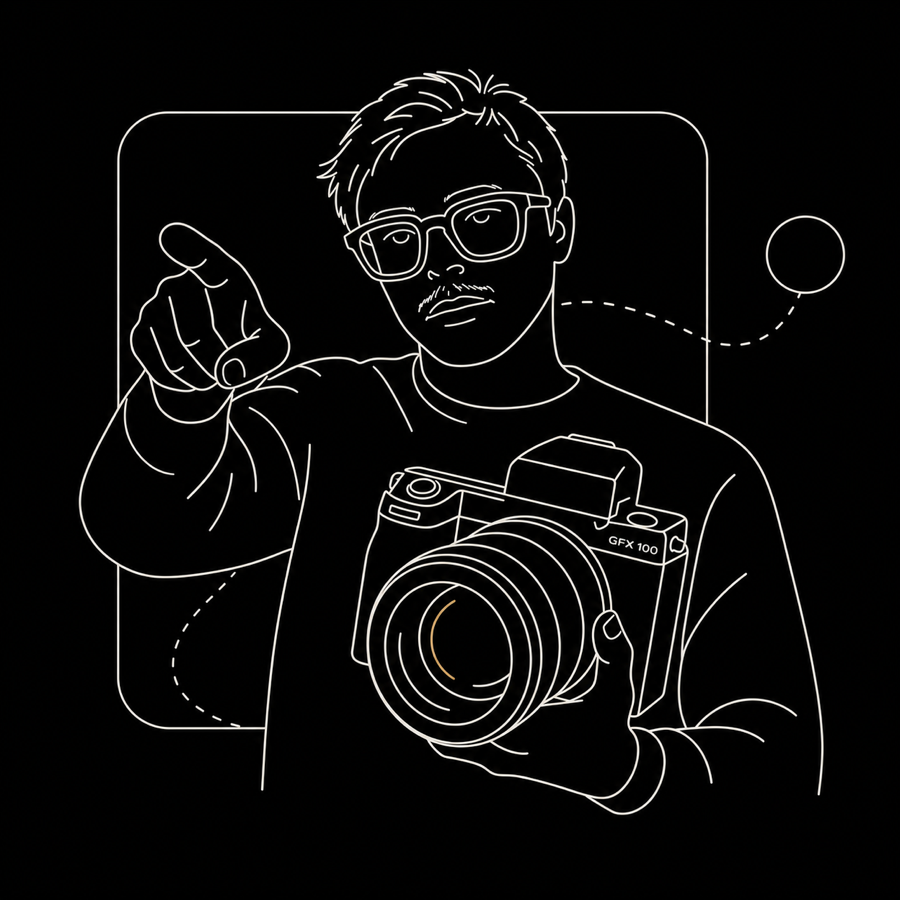
Ex-CPO of Ozon Travel and Ostrovok, 25 years in IT building products and leading teams across startups and corporations. Solopreneur, AI product developer, and educator — more than 450 people have been through my labs.
These days I build AI-first apps and services (Cenno, Cull, a genetic toolkit, and more) and teach the way I work: start from goals and human needs, keep taste the whole way through.
Who this is for
- Designers going agentic
- You've tried Claude Code or Codex and want your craft to survive the transition.
- Product managers, founders, and small-business owners
- Turning an idea in your head into a shipped product.
- Career growers
- Staying on the technology frontier — and dreaming of launching something exceptional.
Not for you if a certificate matters more than a shipped product, or you'd rather outsource taste than own it.
What participants already shipped
This isn't theory. Everything below was built by Claude Code Lab participants — the cohort this course grows out of: product people, founders, analysts, and people who had never written code. In weeks, not months.
- A 20-year-old print shop · no coding background
- "I still can't believe it — my son says nobody would believe his mother is programming at 3am and sending him terminal commands." Payroll went from a full day to minutes; prepress checks run without reprints; a new business unit runs on its own lightweight ERP instead of corporate software.
- Production studio · a prototype for clients and investors
- "On the first try it produced a working prototype we show to clients and investors — and they go: wow, this looks great." Two passes, about $50 in tokens — instead of months of development and tens of thousands of dollars.
- Agency · Google Ads analyst
- A web interface on the Agent SDK: negative-keyword and competitor analysis, ready-made recommendations and slides. Weekly reports run on parallel agents — one gathers, one checks, one writes the summary.
- HR · candidate-scoring dashboard
- "Claude Code now feels permanently in my context window." A forty-question survey became an analytics site any hiring manager can use to compare candidates. Built in ninety minutes.
Everyone shipped — from a worked-out idea to a working prototype you can open by link.
An investment that stays with the team
- A work project as the coursework
- Your employee takes a real company task through the lab. The output is a working prototype and a DESIGN.md of your brand: a design system as code that AI tools obey.
- An asset, not a certificate
- The goal → job → build → taste → ship pipeline, the templates, and the session recordings stay with the team and transfer to the next task — prototypes without waiting on the dev queue.
- Time under control
- Sessions in the evening: Monday and Wednesday, 18:00 CET — outside core hours. Independent practice is 3–5 hours a week, for 5 weeks total.
- Risk covered
- A full no-questions refund within the first 7 days. Companies can pay by invoice.
Pick your format
| Format | Price | What's included |
|---|---|---|
| Standard | €500 | 10 live sessions + recordings, WhatsApp group, weekly homework, DESIGN.md templates, Claude Fable live on shared projects |
| Personal | €1,200 · 3 seats | Everything in Standard + 4 private 1:1 sessions, a full review of your project, priority feedback |
| Team | €2,700 | Everything in Standard, up to 7 people, 4 dedicated team sessions |
The cohort starts July 27 — one small group, 8–15 builders. Invoice payment for companies. Full refund within the first 7 days.
A ready-to-send approval request
Copy it, fill in the name, hit send — everything a decision needs is already inside.
Subject: Training approval request — Goal-Driven Design (5 weeks, €500)
Hi [Name],
I'd like your approval to join Goal-Driven Design — a 5-week lab on designing products with AI agents. It's run by Gleb Kalinin, ex-CPO of Ozon Travel and Ostrovok; more than 450 people have been through his labs.
What the team gets:
- My coursework will be one of our real projects: the output is a working prototype and a design system of our brand as code (DESIGN.md) — both stay with us.
- I'll learn the goal-to-ship pipeline with agents (Claude Code, Codex, Figma MCP) and can carry it over to the team's work.
- Session recordings, templates, and materials remain available after the course ends.
The cost:
- €500 for the Standard tier (invoice payment available).
- Time: two 2-hour sessions a week (Mon & Wed, 18:00 CET — outside core hours) plus 3–5 hours of practice.
- Risk: a full refund within the first 7 days if it's not a fit.
The cohort starts July 27. Program and details: ai-design.salient.community (this presentation lives there too).